Long-term performance is built through well-governed Client-Supplier relationships
Organizations must then transform transactional commercial relationships into structured partnerships, capable of creating durable value and resilience.
I intervene when commercial relationships begin to fragment and stall: persistent tensions between buyers and sellers, fragmented decision making, and innovation failing to reach where it is expected.
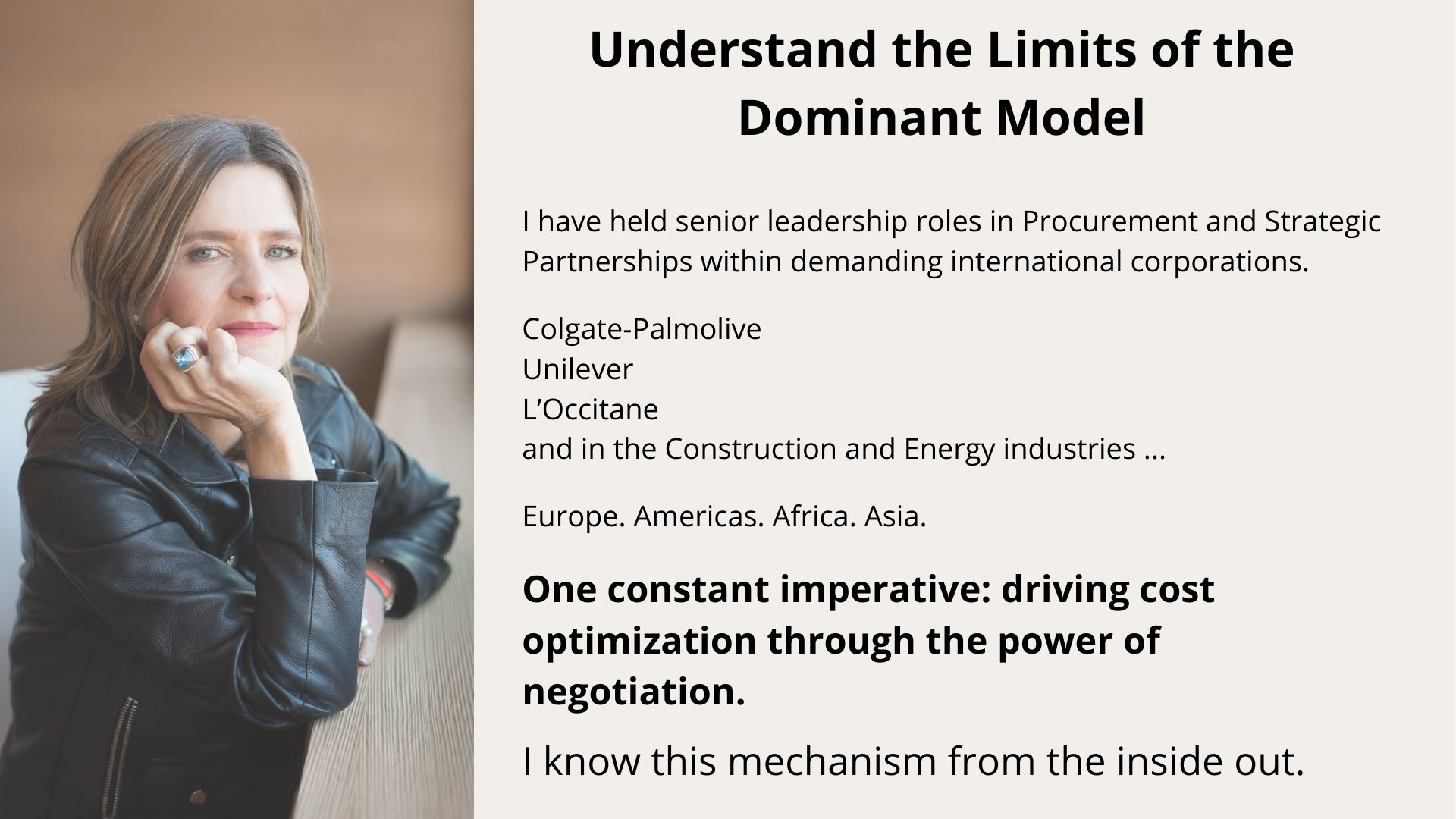
With 30 years of experience in senior procurement leadership roles within leading international groups, across Europe, the United States and major global markets, I act as an architect of the client supplier interface, structuring relational and governance frameworks that bring coherence to decisions made by client and supplier teams and turn the relationship into a competitive advantage in terms of performance and resilience.
When Client-Supplier relationships shape future performance, leaving them unmanaged becomes a risk. Let’s talk.
My Role
I step in when relationships begin to tighten or no longer deliver the expected value relative to the investments made, before they derail.
At this stage, decision making fragments, priorities drift apart, innovation fails to reach where it is expected, and the relationship is no longer managed in a structured way.
I help organizations restructure their client supplier relationships and turn them into solid partnerships, capable of sustaining performance and resilience over time.
The Approach
A partnership cannot be declared. It must be designed, or it will fail.
My approach is based on a structured and proven methodology, refined over more than ten years and deployed in complex international contexts. It relies on a six-step methodology to transform a client supplier relationship into a structured partnership within a few months.
The method combines framing and decision making, executive commitment, and co-construction with operational alignment. It gives clients and suppliers an equal role around a shared vision, ambition, and priorities, enabling genuinely common and executable initiatives to emerge.
It leads to the co-construction and co-validation of concrete action plans, approved at the highest level of both organizations, with clear ownership, milestones, and pre-estimated impacts. The methodology is designed to ensure the effective translation of strategy into operational execution.
What the Method delivers, Concretely
The Method enables the structuring of an operational Client-Supplier partnership within twelve weeks, through co-construction, mobilizing both parties at the appropriate decision-making level.
Concretely, it enables organizations to
– engage clients and suppliers around genuinely shared objectives, jointly defined and validated
– ensure priority alignment, through topics brought forward in a balanced way by both clients and suppliers
– surface concrete financial, extra-financial and operational levers, grounded in the operational realities of both organizations
– formalize a short-, medium- and long-term co-constructed and co-signed action plan, with clear ownership and milestones
– secure execution over time, based on explicit, shared and monitored commitments
The result is an operating partnership, immediately actionable by teams and capable of delivering measurable impact on performance and resilience.
Results & Value delivered
The method delivers operational results through structured co-construction between Client-Supplier organizations, focusing leadership attention on what truly creates value.
It enables:
– Faster, more relevant innovation, aligned with business priorities and execution capabilities
– Sustainable cost reduction, through end-to-end value chain simplification and removal of inefficiencies
– Stronger value chain resilience, securing supply and critical dependencies in volatile environments
– Aligned ESG priorities, translated into concrete and measurable outcomes
– Greater organizational alignment, breaking silos across functions and organizations
The outcome is a structured Client-Supplier partnership that supports sustained performance, resilience and competitive advantage.
When Client-Supplier relationships shape future performance, leaving them unmanaged becomes a risk. Let’s talk.
PROPOSALS
consulting
Renewing Procurement operating model to overcome upcoming challenges
Training & Mentoring
Supporting the Procurement Function in the age of AI
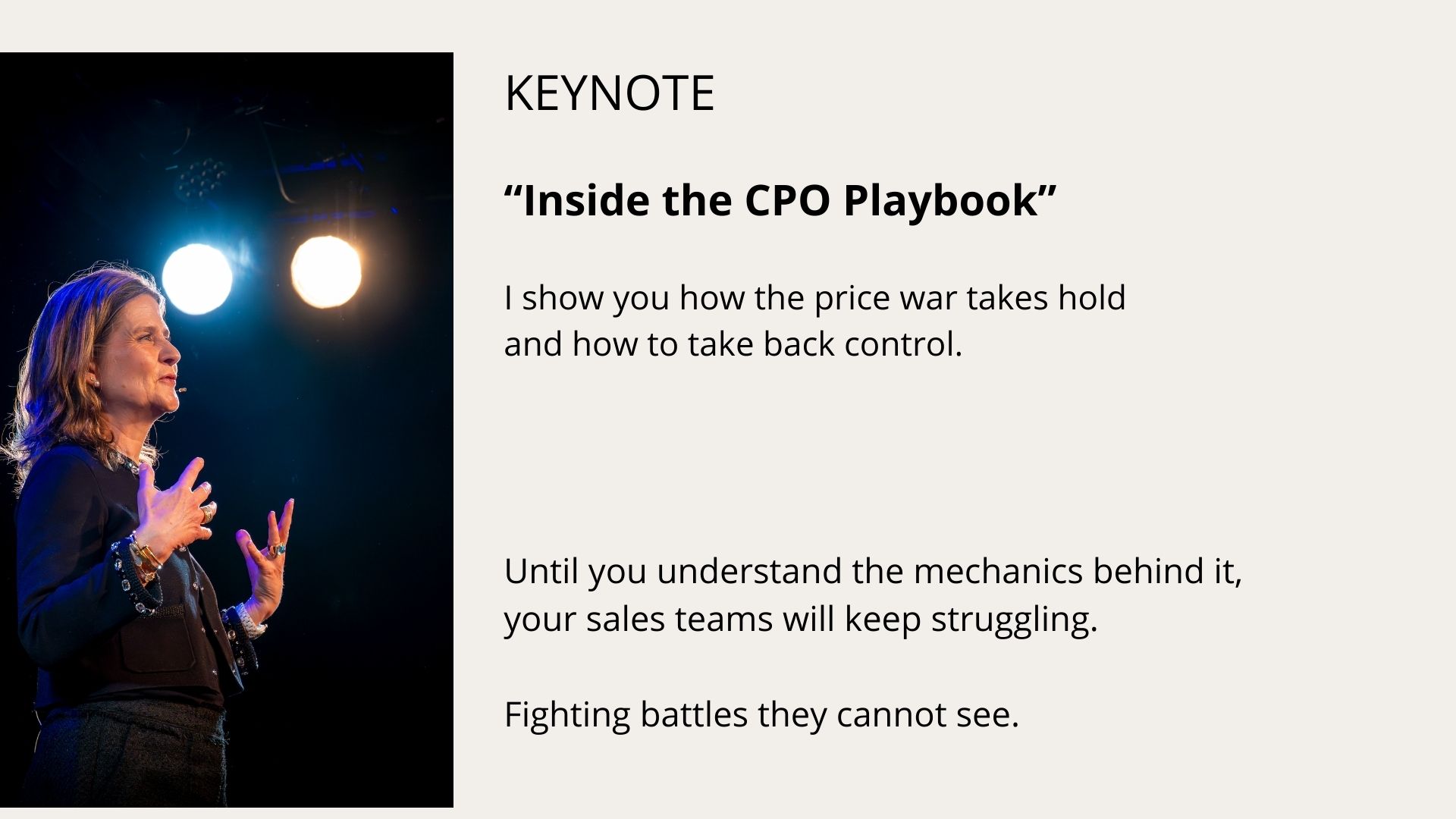
Keynotes
Fostering the emergence of a visionary perspective for the Procurement function
PUBLICATIONS
From the Editor:
Procurement is at a crossroads. Long seen as a cost-cutting function, it now faces the urgent need to address global disruptions, supply chain fragility, and rising environmental and social challenges.
Artificial Intelligence or Emotional Intelligence ?
Numerous publications focus on the role that artificial intelligence will play in the future of all professions, including procurement. However, emotional intelligence, which enables us to build relationships and create commercial value, remains an irreplaceable...
For the first time, a state is condemned for climate inaction. April 9, 2024
On Tuesday April 9, the European Court of Human Rights (ECHR) made history by condemning Switzerland for violating the European Convention on Human Rights. This decision follows a complaint denouncing the inadequacies of the Swiss authorities in their fight against...
No fight against climate change without respect for human rights.
It’s important to realize the extent to which human rights violations on the other side of the world and environmental damage are linked. We cannot hope to combat climate change while neglecting the human rights of our foreign suppliers.
European Parliament vote in favor of Duty of Care Directive: Procurement Departments and AI on the front line. April 26, 2024
The directive marks an additional and complementary step to the reporting obligation imposed by the CSRD (Corporate Responsibility Reporting Directive). Companies will no longer simply have to report their extra-financial performance, but must also take into account...
The CS3D directive, aimed at imposing an obligation of social and environmental protection, is on the way to becoming a reality. March 17, 2024
Following the adoption of the CSRD (Corporate Sustainability Reporting Directive), which came into force on January 1, 2024, the compromise on the European directive on corporate responsibility for human and environmental rights was approved today by the member states...
“On the Environmental Front, China Is Widening a Gap That Risks Becoming Unbridgeable for Western Companies”. Translation of an article published in Le Monde, March 12, 2025
China is advancing fast on environmental and ESG goals, while Europe considers weakening its standards. This growing gap could soon leave Western companies unable to compete.
“For a restorative procurement policy” Published in Le Monde on May 16, 2023
While the CSRD is being implemented, the practice of regenerative procurement allows companies to improve their financial and non-financial results. Imagining new virtuous approaches that go beyond the deleterious practices of excessive competition should contribute to regenerating, day after day, the ecosystem of companies, and therefore the environment and society.
As the Covid-19 pandemic continues to weigh on world trade, the inversion of the balance of power between companies and their suppliers, which is responsible for the rise in costs, could become sustainable. Article published in Le Monde on November 5, 2021
Could we have foreseen that the Covid crisis, which had already damaged value chains in the winter of 2020, would continue to severely disrupt the entire global industry? Companies built their 2021 budgets on the assumption that the crisis would only last a few months, until everything was back to normal and everyone was back to their old lives